Fascination with wickedness obscures what is good, and roving desire perverts the innocent mind.
Wisdom of Solomon 4:12

Saturday, June 8, 2013

A World Split Apart - Solzhenitsyn

 Thirty-five years ago today – on June 8, 1978


I am sincerely happy to be here with you on this occasion and to become personally acquainted with this old and most prestigious University. My congratulations and very best wishes to all of today’s graduates.

Harvard’s motto is “Veritas.” Many of you have already found out and others will find out in the course of their lives that truth eludes us if we do not concentrate with total attention on its pursuit. And even while it eludes us, the illusion still lingers of knowing it and leads to many misunderstandings. Also, truth is seldom pleasant; it is almost invariably bitter. There is some bitterness in my speech today, too. But I want to stress that it comes not from an adversary but from a friend.

Three years ago in the United States I said certain things which at that time appeared unacceptable. Today, however, many people agree with what I then said…
The split in today’s world is perceptible even to a hasty glance. Any of our contemporaries readily identifies two world powers, each of them already capable of entirely destroying the other. However, understanding of the split often is limited to this political conception, to the illusion that danger may be abolished through successful diplomatic negotiations or by achieving a balance of armed forces. The truth is that the split is a much profounder and a more alienating one, that the rifts are more than one can see at first glance. This deep manifold split bears the danger of manifold disaster for all of us, in accordance with the ancient truth that a Kingdom – in this case, our Earth – divided against itself cannot stand.

Contemporary Worlds
 
There is the concept of the Third World: thus, we already have three worlds. Undoubtedly, however, the number is even greater; we are just too far away to see. Any ancient deeply rooted autonomous culture, especially if it is spread on a wide part of the earth’s surface, constitutes an autonomous world, full of riddles and surprises to Western thinking. As a minimum, we must include in this category China, India, the Muslim world and Africa, if indeed we accept the approximation of viewing the latter two as compact units. For one thousand years Russia has belonged to such a category, although Western thinking systematically committed the mistake of denying its autonomous character and therefore never understood it, just as today the West does not understand Russia in communist captivity. It may be that in the past years Japan has increasingly become a distant part of the West, I am no judge here; but as to Israel, for instance, it seems to me that it stands apart from the Western world in that its state system is fundamentally linked to religion.

Read the whole article here

Thursday, May 30, 2013

Learning To Be Christian


  There are many things in life, such breathing and the beating of our hearts that are automatic. We take little notice of these functions precisely because they require no learning or effort on our part. However, other than our automatic body functions, nearly everything in this earthly life requires learning and effort.  It could be said that living is the act of being a lifelong student and lifelong enactor of our learning.  It is a great fallacy to assume that one can be or do anything successfully without both learning and effort.  
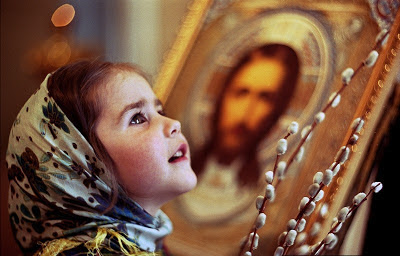

  In fact, the more difficult the task is, the more learning and effort that is required from the individual. Consider the typical American life, one learns and applies effort to ride a bike, drive a car, manage a checkbook, and so on; when we achieve a level of proficiency we can then be called cyclists, drivers, and money managers.  This is no less true when it comes being a Christian. Being a Christian requires a level of proficiency.  In fact, Orthodox Christians believe it is the one thing that requires the greatest level of proficiency in all of life.

  From the Orthodox Christian perspective becoming Orthodox is a lifelong event that is nothing less than arduous.  Becoming Orthodox is not something for the weak hearted or the lazy, rather it requires a strong resolve and a maximum effort from birth to death.  This is perhaps why Orthodoxy can be either extremely attractive or extremely unattractive, depending upon one’s preferences.

Historically American Christianity has catered to both kinds of people.  The conservative sects have taught: “Christ died for your sins and erased them, so don’t worry about the past, but from now on don’t drink, don’t smoke, don’t do drugs, don’t dance, don’t curse, don’t lie, dress modestly, be nice, tithe to the church, obey your leaders, and come to church.” 

  The liberal sects have taught: “Christ was a great example of a human, be who you are, do what you want to do, try not to bother anyone, stand up for the individual’s freedom to do as he pleases, fight for equality, and most of all be happy.”

  Post modern Christianity is a hybrid of the two, picking and choosing what a particular sect finds more desirable.  Obviously each sect has their hobby horse; however, in all cases the attainment of proficiency as a “sectarian Christian” is fairly easy.  Learn the various tenants of the sect’s confession and follow the few basic guidelines, and you are living the Christian life.

  Five years into my journey to become Orthodox, I have come to learn that it is not so easy for the Christian Orthodox. There is so much to learn; our faith has a content has two thousand years of substance. It contains the scriptures, the consensus of the fathers, the council’s, the creeds, the canons, the liturgies, the hymnography, the iconography, the monastic teachings.

  There so much to apply our effort towards: the healing of our souls, the undoing of our delusion, the destroying of our disordered passions, the hesychast practices, the liturgical cycles, the cycles of life in the book of needs, and most of the endless struggle to attain of Christ likeness.  We never expect a time to arrive in the Orthodox life when we can say, I get it, and I have a good grasp on being Orthodox. There is always more, there is always a greater goal out ahead, leading to more beauty and wisdom.  In Orthodoxy there is always a bottomless well of learning and struggling ahead to become Christ like.

Tuesday, May 14, 2013

Post Post-Modernism


Most of today’s influential Western thinkers concur that we have arrived at period called the post-modern era.  The term finds it origin with scientist Michael Polanyi, who expressed the view that a change is needed in Western thought tradition, moving it from objectivism and subjectivism to a less culturally constrained method[1]. Polanyi actually called this concept, “post-critical.”

Polanyi asserted that the way past the present Western modernism is semiotics[2], a concept introduced by Charles Sanders Peirce.  Sander’s semiotic process described a methodology of discerning truth based on the interpretation of the sign or symbol presented by an object or an action.  Sanders asserted that the ideal interpretative process for human reality is one that involves the continuous interpretation of the signs symbols presented by any object or action, each of which is then subject to further interpretation.  In short, Sanders rediscovered an aspect of pre-modern methodology of discerning truth.

However, in real time and space, post-modernism has become primarily a process of deconstructing all that was concluded by the culturally constrained objective/subjective critical modernism. While embracing semiotics it is still sorely lacking.

Why? Because, the Western post-modernism is still captive to subjectivism; while the western post- modern mind has come to reject critical objectivism, it has not come to terms critical subjectivism.  As a rule, the average western person still trusts his own individual intellectual capacities.  In short, most know that everyone is biased; therefore, they choose to go with their own personal biases concluding that ultimate truth cannot be known.

It is precisely at this point in human history that the West needs a dose of Orthodox Christianity to pull it out of the mire.  Orthodoxy would agree with Polanyi and Sanders regarding the value of Semiotics, however, with two additional imperatives. 

1.     The use of signs and symbols to arrive at truth (semiotics) is not merely a private experience; it is a collective or concilliar experience.  The signs have a meaning that is participated in by a general consensus of those who experience them.  The individual intellect must be seen as less able to discern than that of the whole.

2.     The merely intellectual use of signs and symbols to arrive at truth is to be held with suspicion precisely because the main consequence of the fall of man is not primarily angering a law abiding God, but rather of the subjection of the intellect to our personal disorders and dysfunctions (the passions).  Discerning truth is not only a corporate matter, but a looking for the understanding of those who are to a greater degree healed of our common dysfunctions.

The way through to post post-modernism is found in the way that has never changed, Orthodoxy.


[1] Polanyi, Michael, Personal Knowledge (Chicago: University Of Chicago Press; 1974), 6
[2] "Semiotic." Websters College Dictionary (New York: Random House, 1997), 1176

Wednesday, February 6, 2013

Daily Prayers for the Living

A Daily Orthodox Prayer

O Lord Jesus Christ, our God, in Thy mercies and loving kindness Thou regardest the humble prayers of all who call upon Thee with their whole heart; incline Thine ear and hear now my prayer, offered to Thee in humility:

Be Mindful, O Lord, of Thy Holy, Catholic and Apostolic Church; confirm and strengthen her, increase her and keep her in peace, and preserve her unconquerable forever.

Be mindful, O Lord, of our bishop (your bishop's name), and of every bishop of the Orthodox Church; the priests and deacons, and all the clergy of the Church, which Thou hast established to feed the flock of Thy word; and by their prayers have mercy upon me and save me, a sinner.

Be mindful, O Lord, of all civil authorities, of our armed forces, of this city in which we reside, and of every city and the countryside; grant them peaceful times, that we, in their tranquility, may lead a calm and peaceful life in all godliness and sanctity.

Be mindful, O Lord, of my parents, (their names), of my brothers and sisters, (their names), of relatives, (their names), and of my friends, (their names); grant that they may have mercy, life, peace, health, salvation and visitation, pardon and remission of their sins; that they may ever praise and glorify Thy Holy Name.

Be mindful, O Lord, of those who travel by land, by sea, and by air; of the old and young, the sick, the suffering, the sorrowing, the afflicted, the captives, the needy and the poor; and upon them all send forth Thy mercies, for Thou art the Giver of all good things.

Be mindful, O Lord, of me, Thy humble servant; grant me Thy grace, that I may be diligent and faithful, avoiding evil company and influence, resisting temptation; that I may lead a godly and righteous life, blameless and peaceful, ever serving Thee; that I may be accounted worthy of entering the Kingdom of Heaven. Amen.

Thursday, January 31, 2013

An Orthodox D. Min. Degree

St. Vlad's launches an new D. min. program.
The empahsis of the degree will be on preaching!
Read more...

Wednesday, January 9, 2013

Delusion and Individuality


Most people live out our lives unaware of our own delusions. Furthermore, many of us live in situations wherein our delusions are encouraged to unfold and grow by our very way of life. Consider our consumerist lifestyle of this present day. We see an item that attracts us, either by its beauty, or intricacy, or just plain usefulness. Then we begin to see ourselves with this item. Soon, we become convinced that the particular thing is an item that we must possess in order to be whole and complete. 

The plain fact is that we usually are not made more whole or complete, and the item enters the rest of the pile of junk that we store away to possibly use some day.  The driving force beneath consumerism is for the most part a kind of delusion.

Couple, our delusional tendencies with the view that every man is created with inalienable right to seek life, liberty, and the pursuit of happiness, and the result is a very dangerous delusional recipe.  Not that there is anything wrong with life, liberty, and the pursuit of happiness. The problem is with individualistic interpretations each person gives to these concepts.  Let’s face it, there are all kinds of things that make people happy that are not good, not kind, not loving, not gentle, nor beautiful; in fact there are all kinds of things that make some happy but are in fact evil.

Individuals are not trustworthy; we always need a system that checks our individual nuttiness. Delusion is ENEMY NUMBER ONE!  Never is this more the case than when it comes to our spirituality.

A recent British study asked the question- Can being spiritual but not religious lead to mental health issues? The answer is yes, according to a recent study.

The study, published in the January edition of the British Journal of Psychiatry, says spiritual but not religious people, as opposed to people who are religious, agnostic or atheist, were more likely to develop a "mental disorder," "be dependent on drugs" and "have abnormal eating attitudes,” like bulimia and anorexia.
“People who have spiritual beliefs outside of the context of any organized religion are more likely to suffer from these maladies,” said Michael King, a professor at University College London and the head researcher on the project.
Thirty percent of respondents who identified as spiritual said they had used drugs, a number that was nearly twice as much as the 16% of religious respondents who said they had used drugs, according to the study. On mental health issues, the study said spiritual but not religious people were more likely to suffer from “any neurotic disorder,” “mixed anxiety/depressive disorders” or “depression” than their religious counterparts.
Read the whole CNN article here…

If there is one thing that is necessary is in order to avoid delusion it is a concilliar mind. Conciliarity is the experience of divinely restored human life. It describes an experience of synergy between God and humans, in which humans participate with God through the Holy Spirit in the formulation of Truth. “Through conciliarity, the nature of the Church as theanthropic communion in Christ is expressed.” By participating in the conciliar life of the community — unity in diversity through mutual-indwelling — we participate in the divine life, and vice versa. Thus conciliarity is found “in every act of communion among all members of the Church’s body.”
According to most Orthodox theologians, conciliarity is hierarchical. This is closely tied to its Trinitarian nature, for the Trinity itself is hierarchy. It is claimed that, far from being contradictory or competing systems, conciliarity actually presupposes and requires hierarchy.

Conciliarity, as the communion of divinely restored humanity, is deeply eucharistic. It is in the eucharist that we are made one in Christ, a unity in diversity.  Unity and catholicity are attributes of the eucharistic community. All conciliar activity is grounded in the eucharistic experience.


Saturday, January 5, 2013

New Statistics On American Marriages


It is now clear that the divorce rate in first marriages probably peaked at about 40 percent for first marriages around 1980 and has been declining since to about 30 percent in the early 2000s.


This is a dramatic difference. Rather than viewing marriage as a 50-50 shot in the dark it can be viewed as having a 70 percent likelihood of succeeding. But even to use that kind of generalization, i.e., one simple statistic for all marriages, grossly distorts what is actually going on.
 
Full article here...